Diagonals and Triangles in Photography Composition
- Diagonal lines feel dynamic because they suggest movement and instability, while horizontal lines feel calm and vertical lines feel stable and strong.
- Diagonals can be real, such as roads, railings and shadows, or implied, such as a person's gaze, a pointing arm or the line between two subjects.
- Triangles appear when three points of interest or converging lines are connected; a wide base feels stable, an inverted point feels tense.
- The golden triangle grid divides the frame with one corner-to-corner diagonal and two perpendicular lines, giving strong placement points for diagonal scenes.
Diagonals and triangles are composition tools that add energy and structure to a photo. A diagonal is any line, real or implied, that crosses the frame at an angle rather than running level or upright, and it suggests movement. A triangle forms when three points or converging lines connect, giving the image a strong, stable shape the eye can follow.
Why do diagonal lines feel so dynamic?
Lines carry mood. Horizontal lines echo the horizon and a body lying down: calm, restful, still. Vertical lines echo standing trees and buildings: stable, strong, upright. Diagonals are neither. They look like something in motion or about to fall, like a runner leaning forward or a slope you might slide down. That sense of instability is exactly what gives them energy.
| Line direction | Typical feeling | Common sources |
|---|---|---|
| Horizontal | Calm, peaceful, wide | Horizons, shorelines, fields, a person lying down |
| Vertical | Stable, strong, formal | Trees, columns, towers, standing people |
| Diagonal | Dynamic, active, tense | Roads, stairs, bridges, slopes, shadows, rooftops |
| Curved | Graceful, flowing, gentle | Rivers, winding paths, arches, the human body |
Diagonals are closely related to leading lines, but not every diagonal leads anywhere, and not every leading line is diagonal. A diagonal may simply cut across the frame to add tension, while a leading line's job is to guide the eye to a subject. The strongest images often combine both: a diagonal road that also carries the eye to a distant figure.
Where do you find diagonals?
Real diagonals
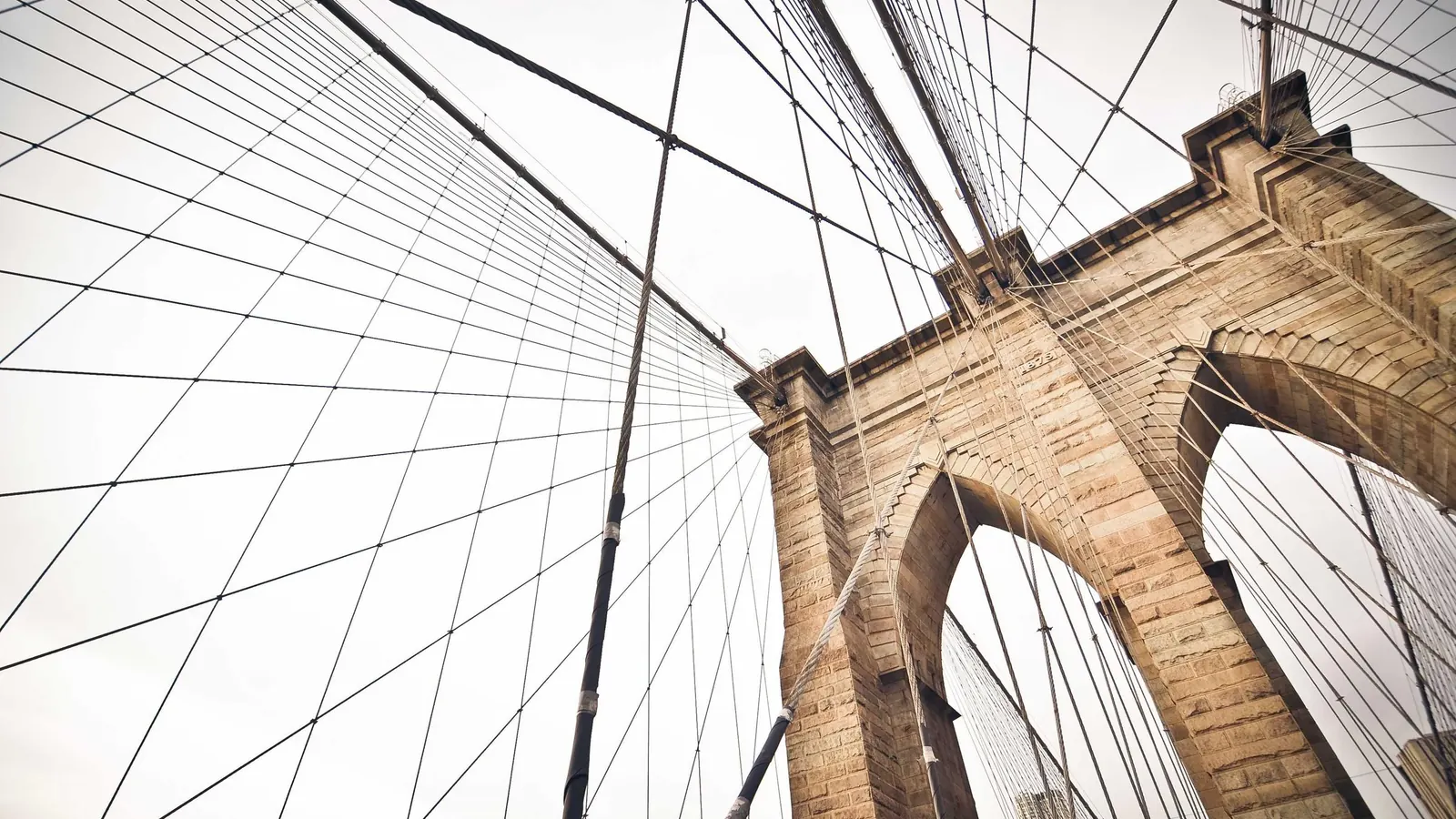
These are physical lines in the scene: staircases, escalators, bridge cables, railings, roof edges, the slope of a hill, a fallen tree, a row of parked bicycles, a long shadow at sunset. Many vertical or horizontal lines also become diagonals simply because of your viewpoint. A straight road becomes two converging diagonals when you stand in it. A tall building photographed from close to its base, looking up along its edge, turns its verticals into steep diagonals.
Implied diagonals
Some of the most effective diagonals are not drawn at all. The eye connects points and follows directions on its own:
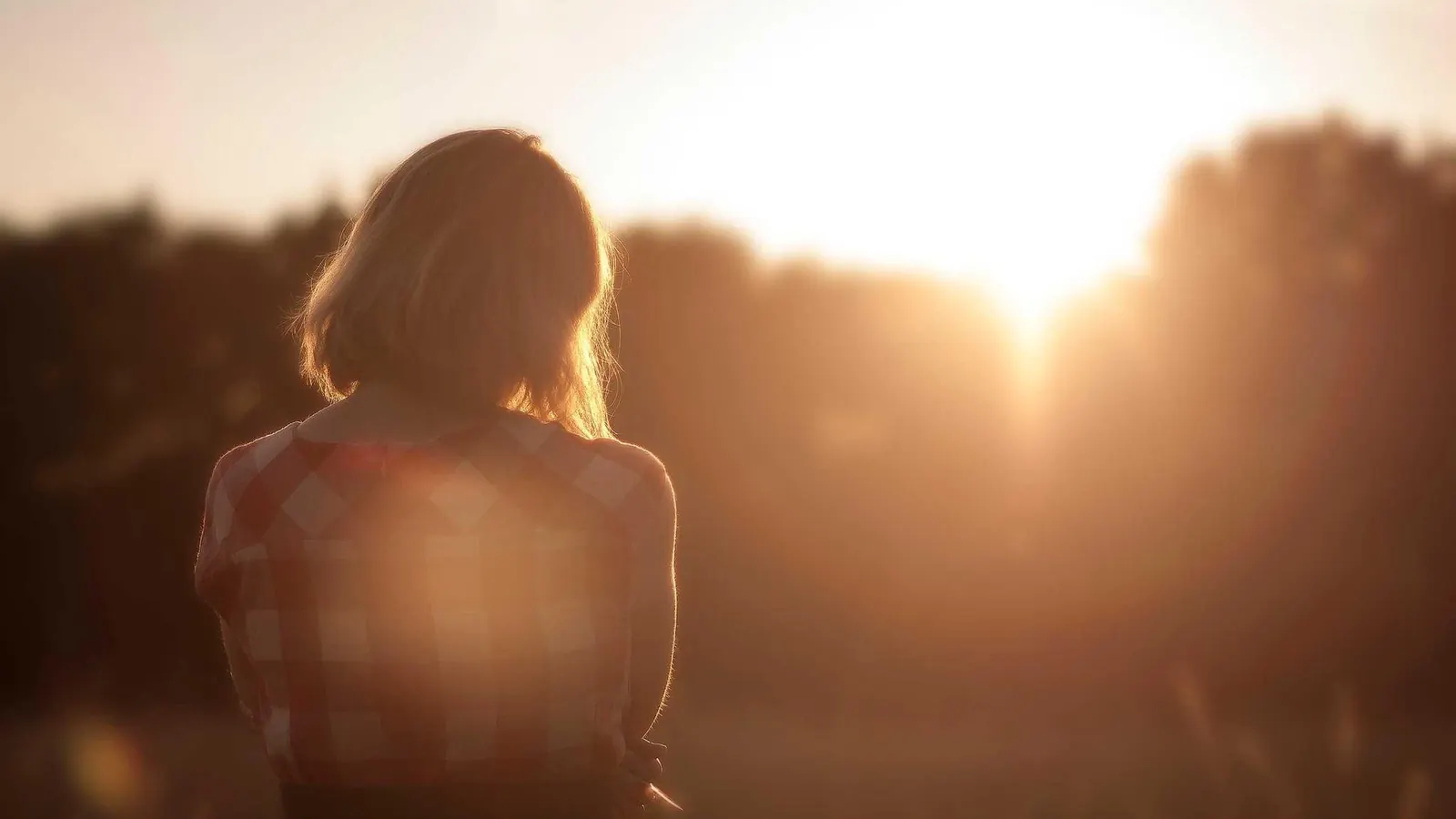
- Gaze: a person looking down toward the lower corner creates an invisible diagonal along their line of sight.
- Gesture: a pointing arm, an outstretched leg, a tilted head.
- Two subjects: one subject in the upper left and another in the lower right create a diagonal between them, even with nothing physically connecting them.
- Movement: a bird flying or a cyclist riding across the frame at an angle implies a path.
How do you compose with diagonals?
- Look for angled lines first. Before raising your phone, scan for anything that crosses the scene at an angle. If you find nothing, change your position to create one.
- Change your viewpoint. Step to the side of a straight railing so it runs at an angle away from you. Shoot stairs from the bottom or top rather than straight on. Get low beside a wall so its top edge slices through the frame.
- Run the diagonal from corner toward corner. A diagonal that starts near one corner and heads toward the opposite one uses the full length of the frame and feels most deliberate. Lines that start or end awkwardly in the middle of an edge are weaker.
- Place the subject on or at the end of the line. A diagonal is more powerful when it delivers the eye to something: a person at the top of the stairs, a boat at the end of a pier.
- Keep the rest of the frame level. Diagonals work best against a stable reference. If the horizon or a building in the background is crooked, the diagonal reads as an accident.
- Check the crop. Make sure the line does not exit the frame exactly at a corner, which can create a distracting point of tension; slightly before or after usually looks better.
Diagonals versus a tilted camera
Tilting the whole camera so the horizon slants, sometimes called a Dutch angle, creates diagonals artificially. It can convey unease or chaos, but used casually it just looks like a crooked photo. If you tilt, tilt clearly, by 15 degrees or more, so it is unmistakably deliberate. Otherwise, straighten the horizon and find real diagonals in the scene instead. The guide to straightening a crooked photo helps when a slight tilt slips in by accident.
How do triangles work in a composition?
Three is the smallest number of points that encloses a shape. When a photo contains three points of interest, the eye tends to connect them into a triangle and circulate around it, which holds attention inside the frame. Triangles appear in several ways:
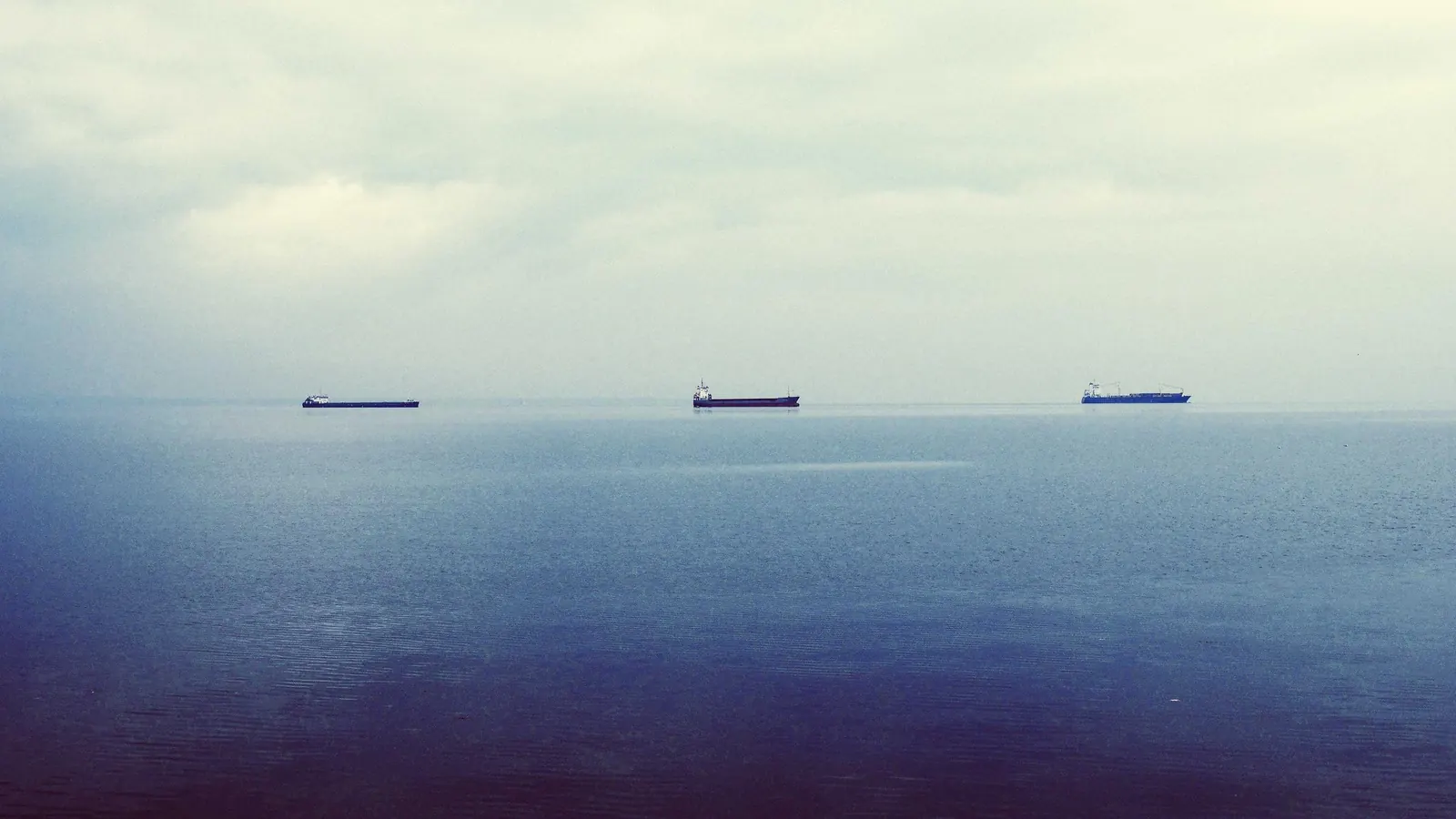
- Three subjects: three people, three boats, three trees. The eye travels between them.
- Converging lines: two diagonals meeting at a vanishing point form a triangle, as with railway tracks or a road narrowing to the horizon.
- Shapes in the scene: mountain peaks, rooftops, tents, the A-frame of a bridge tower.
- Body shapes: a hand on a hip forms a triangle between arm and torso; crossed legs or a person sitting with knees up create triangular forms.
Stable and unstable triangles
A triangle resting on its wide base, like a mountain, feels solid and grounded. An inverted triangle balanced on its point feels tense and precarious. A scalene triangle, with three unequal sides, often feels more natural and dynamic than a perfect equilateral one, because it introduces diagonals of different angles.
How can you use triangles in group photos?
Lining three or more people up at the same height creates a flat horizontal row that feels static. Staggering their heads into a triangle is one of the simplest improvements you can make:
- Vary head heights: one person sits, one stands, one leans; or a taller person in the middle and shorter ones on either side.
- Avoid stacking heads directly above each other: offset them so lines between faces run at angles.
- Larger groups: build several overlapping triangles rather than one long line.
These principles carry straight into portraits of one person too, through angled shoulders, a tilted head or an arm creating a triangle of space. The guide to portrait photos with a phone covers posing and light for single subjects. Because faces carry so much visual weight, the triangle between them is often the main structure the viewer feels, even if they never consciously notice it.
What is the golden triangle grid?
The golden triangle is an alternative composition grid suited to diagonal scenes. Draw one line from one corner of the frame to the opposite corner. Then, from each of the two remaining corners, draw a line that meets the main diagonal at a right angle. The frame is now divided into four triangles: two large and two small.
The two points where the short lines meet the long diagonal are strong placement points for subjects, much like the intersections of the rule of thirds. Run your strongest diagonal along the main line, and place your subject at one of the meeting points. This grid is related to the ideas in the article on the golden ratio and phi grid, and it is especially useful when a scene's main line is already diagonal, such as a slope, a staircase or a beam of light.
How does cropping create or strengthen diagonals?
Cropping can rescue diagonals that are almost there. If a line starts in the middle of an edge, cropping can move the frame so it begins near a corner instead. If a diagonal is weakened by clutter on one side, trimming that side makes the line dominant. And a tighter crop can bring three scattered subjects closer to the frame's edges so they form a clearer triangle.
Aspect ratio changes the angle too. The same line appears steeper in a tall 4:5 crop and shallower in a wide 16:9 crop, because the diagonal from corner to corner changes. In a 1:1 square, the corner-to-corner diagonal sits at exactly 45 degrees. If you are unsure which crop gives your diagonal the most energy, WisWit can suggest several crops of the same photo and explain why each one works. For more on how these tools fit together, see the full photo composition guide.
A diagonal and triangle hunt
Go out for fifteen minutes with two goals. First, photograph five diagonals: two real ones you find as they are, two you create by changing your viewpoint, and one implied by a gaze or gesture. Second, photograph three triangles: three subjects, one converging-line triangle and one shape in architecture or nature. Back home, overlay the golden triangle grid in your mind on each diagonal shot and try a crop that runs the line corner to corner. Compare it with the original and notice how much more energy the frame carries.
Frequently asked questions
What do diagonal lines represent in photography?
Diagonal lines usually represent movement, energy and tension. Unlike horizontal lines, which feel calm, or vertical lines, which feel stable, diagonals suggest something leaning, rising or falling. That makes them useful for action, sport, architecture and any scene where you want the image to feel alive rather than still. Gentle diagonals feel lively, while steep ones feel more dramatic.
What is an implied line in a photo?
An implied line is one the viewer perceives without it being physically drawn in the scene. Common examples are the direction of a person's gaze, a pointing hand, the path of a moving object, or the invisible line connecting two separate subjects. Implied diagonals are powerful because the viewer actively completes them, which keeps their eye engaged with the image.
How do I arrange three people for a better photo?
Avoid placing three heads in a straight horizontal row. Instead, vary their heights so the faces form a triangle: have one person sit while two stand, put the tallest in the middle, or ask someone to lean in. Offset heads so none sits directly above another. The triangle keeps the eye moving between faces and makes the group feel connected.
Is the golden triangle better than the rule of thirds?
Neither is better; they suit different scenes. The rule of thirds works well for horizons and centered subjects that need off-center placement. The golden triangle suits images with a strong diagonal, such as stairs, slopes or light beams, because its main line runs corner to corner. Try both overlays when cropping and keep whichever makes the subject and lines feel most natural.