Leading Lines in Photography: How to Guide the Viewer's Eye
- Leading lines are real or implied lines in a scene that carry the viewer's eye toward the main subject or deeper into the frame.
- Lines that start near the bottom edge or a corner and end at the subject are the most reliable, because the eye tends to enter a frame from the edges.
- Getting low and close to the start of a line with a wide lens strengthens convergence, while a telephoto lens from far away compresses lines into stacked layers.
- The most common failure is a line that leads out of the frame or to nothing, leaving the eye with no destination.
Leading lines are lines within a photo, such as roads, fences, shorelines, railings or shadows, that guide the viewer's eye toward the main subject or deeper into the scene. They work because the eye naturally follows edges and contrast. A good leading line has a clear start near the frame's edge and a clear destination worth arriving at.
What are leading lines, exactly?
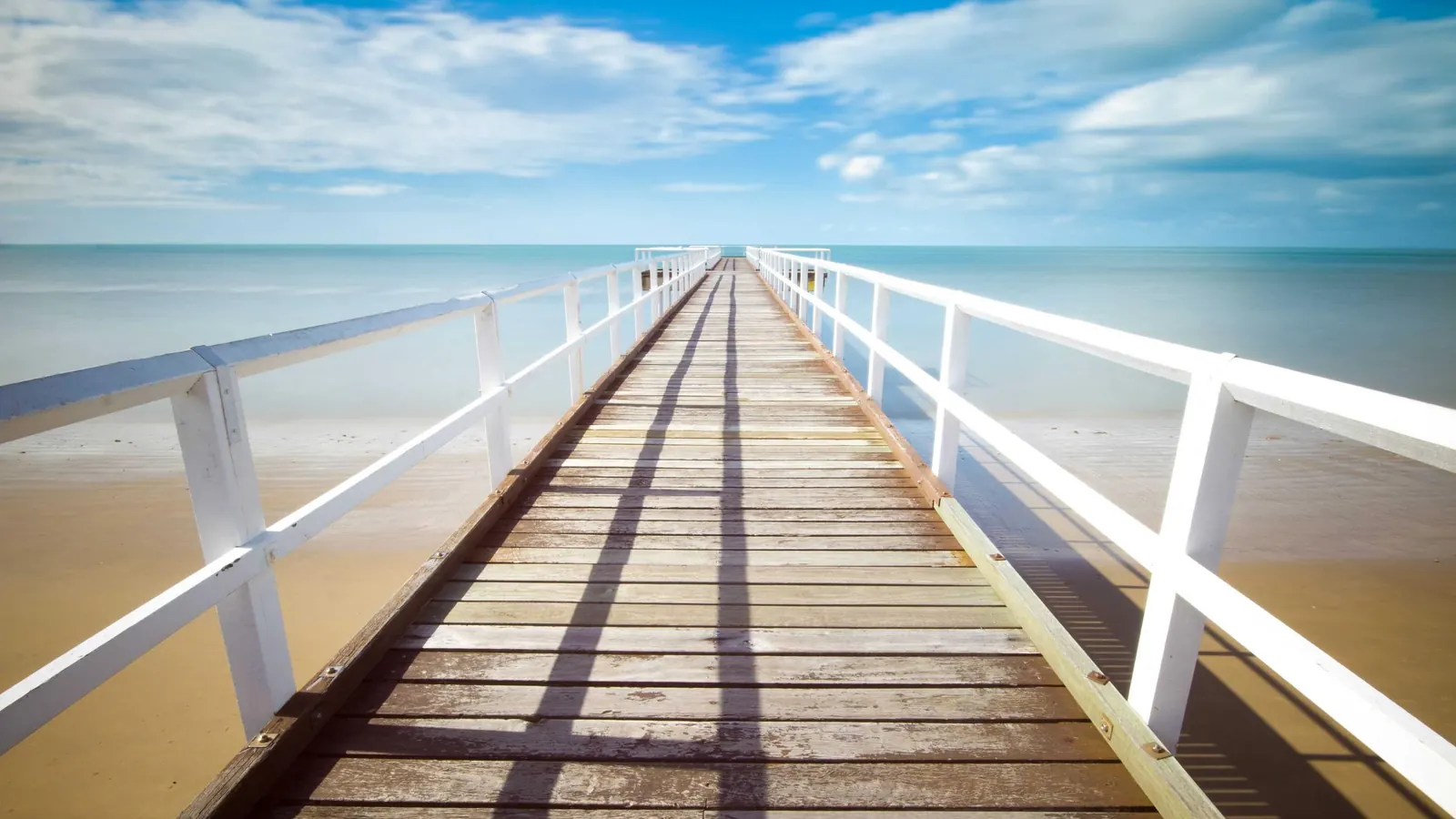
Any visual element that the eye can trace from one point to another can act as a leading line. Some are literal: the painted edge of a road, the rail of a pier, the seam where sand meets water. Others are implied: a row of lampposts the eye connects into a line, the direction a person is looking, an outstretched arm, the path of a shadow across a pavement. In every case the line does the same job: it gives the viewer a route through the picture instead of leaving them to wander.
Leading lines also create depth. When parallel lines recede from the camera, they appear to converge toward a vanishing point, which is one of the strongest cues the brain uses to read distance on a flat image. That is why a picture of a straight avenue or a long jetty can feel three-dimensional even on a phone screen. If depth is your goal, leading lines pair naturally with building a clear foreground, middle ground and background.
It helps to separate leading lines from the broader topic of diagonals. A diagonal is about the angle of a line and the energy that angle creates. A leading line is about direction and destination: it can be diagonal, straight up the middle, curved or zigzagging. Our piece on diagonal lines and triangles covers the angle side; here the focus is where the line takes the eye.
What kinds of leading lines are there?
| Type | Typical examples | Effect on the viewer |
|---|---|---|
| Converging straight lines | Roads, railway tracks, corridors, bridges, crop rows | Strong depth and a fast, direct pull to the vanishing point |
| S-curves and C-curves | Winding rivers, mountain roads, coastlines, garden paths | A slower, relaxed journey through the frame |
| Zigzags | Switchback trails, staircases, folded rooftops | Rhythm and energy, with pauses at each turn |
| Implied lines | A person's gaze, a pointing hand, a row of birds or lamps | Subtle direction the viewer completes in their head |
| Lines of light and shadow | Window light on a floor, long evening shadows, a beam through trees | Direction plus mood, often changing minute by minute |
| Vertical lines | Tree trunks, columns, waterfalls, tall buildings | Height, upward movement, a sense of scale |
Converging lines are the easiest to find and the easiest to overuse. Curves are rarer and often more satisfying, because the eye slows down and takes in more of the scene on the way. Implied lines are the most sophisticated: two people looking at each other create an invisible line between them that holds a composition together even when nothing physical connects them.
Where do you find leading lines?
Once you start looking, they are everywhere. A useful habit is to scan a scene for edges before you look for subjects.
- In cities: tram tracks, curbs, crosswalk stripes, handrails on stairs, the edges of tall buildings when you look up, the line of parked cars, arcades and colonnades.
- In nature: rivers and streams, the curve of a bay, wave lines on a beach, tide marks, fences across fields, ridgelines, rows of vines or olive trees.
- Indoors: long tables, corridors, rows of seats, bookshelves, the strip of light falling through a doorway.
- In people: eye lines, arms, the angle of a shoulder, a scarf trailing in the wind.
These lines are a gift for street photography with a phone, where you can often find a strong line first and then wait for a person to walk into its end point. The same patience pays off when traveling: a path leading to a viewpoint is far more inviting than the viewpoint alone.
How do you shoot leading lines step by step?
- Find the line before the subject. Spot the road, rail or shadow, then ask where it ends. If it ends at something interesting, you already have a composition.
- Decide on the destination. The line needs to arrive somewhere: a person, a building, a tree, a bright sky. If there is nothing at the end, wait for something or move until the line points at an existing subject.
- Get low and close to the start. Lowering the phone to knee height or below and including the near part of the line makes it look longer and more dramatic. A line that starts in the bottom of the frame pulls the viewer in from the edge where they naturally enter.
- Choose the lens for the look you want. The 0.5× ultra-wide lens lets you include the line right from your feet, which exaggerates convergence. A telephoto lens from farther back flattens the scene, so lines become stacked layers rather than sweeping paths. Strictly speaking, perspective comes from where you stand, not from the lens; the wide lens simply lets you stand closer and still fit everything in.
- Place the vanishing point deliberately. Put it on a third intersection for a dynamic feel or dead center for a symmetrical corridor or avenue. Both work; drifting somewhere in between usually looks unplanned.
- Keep the camera level. Tilting a phone upward makes vertical lines lean inward. Unless that is the effect you want, hold the phone straight and step back, or straighten it later.
Where should the line start?
Lines that enter from a bottom corner or the bottom edge feel natural, because that is where the eye tends to step into a picture. A line entering from the middle of the left edge can work too, but a line that begins in mid-air, with no connection to an edge, often feels cut off and weak.
Where should the line end?
Ideally on the subject, or just before it, so the subject sits at the end of the journey. If a road runs to the horizon with a hiker halfway along it, the hiker becomes the natural stop. Lines that pass beside the subject still help as long as they point toward it rather than past it.
Why do some leading lines fail?
A line can just as easily lead the eye out of a photo as into it. The usual problems:
- The line leads out of the frame. A road that exits through the side edge takes attention with it. Turn so the line runs inward, or crop so it ends inside the frame.
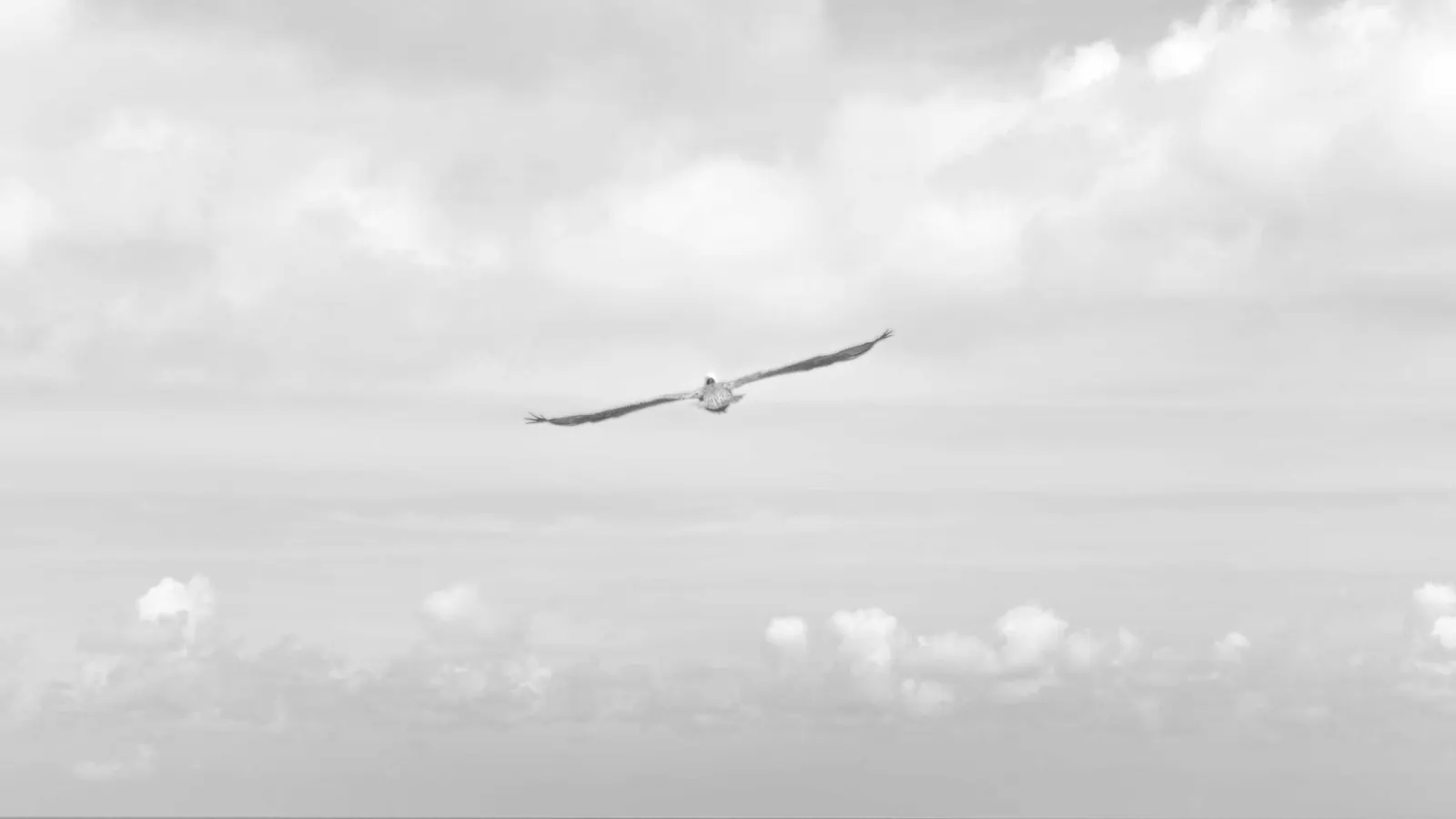
- The line leads to nothing. A beautiful converging pier that ends in empty grey haze can feel unfinished. Add a subject or use the emptiness on purpose, as described in our guide to negative space in photography.
- Too many competing lines. Overhead cables, a fence, a curb and a building edge all pointing different ways create visual noise. Simplify by changing angle until one line dominates.
- The line cuts through the subject. A horizon or railing passing through someone's neck or head is distracting. Raise or lower the camera so the line passes above or below.
- Low contrast. A grey path on grey grass barely registers. Lines read best when they differ in tone or color from their surroundings, for example a sunlit road through shaded fields.
How do leading lines combine with other composition tools?
Leading lines rarely work alone. They are most powerful when they reinforce other decisions in the frame. Place the vanishing point or the subject at the end of the line on a third, as explained in our guide to the rule of thirds, and the off-center destination adds tension to the journey. Run a line through a doorway or an arch and you combine direction with framing. Use light so that the line is the brightest element in an otherwise darker scene and it becomes almost impossible not to follow. If you want the full picture of how these tools fit together, our photo composition guide brings them into one workflow.
Can you strengthen leading lines by cropping?
Often, yes. Three crops do most of the work. First, crop so the line enters from a corner instead of from the middle of an edge; trimming a few percent from one side can move the entry point exactly onto the corner. Second, remove dead space at the far end, so the line arrives at the subject instead of continuing past it into empty sky. Third, try a vertical crop of a horizontal photo: a road or river that runs away from you often feels much longer in a 4:5 or 9:16 frame, which also suits phone screens. Our practical guide to cropping photos explains how to do this without losing too much resolution.
If you want to see different possibilities quickly, an app like WisWit can suggest several crops of the same photo, each with a short explanation of why it works, so you can spot the version where the line truly leads somewhere. Everything happens on your phone, and the crop is saved as a new photo.
A ten-minute leading lines walk
Go out with one rule: you may only photograph a scene if it contains a line you can trace from the edge of the frame to a subject. Find five such lines of different types: one straight, one curved, one made of repeated objects, one of light or shadow, and one implied by someone's gaze. For each, take two frames: one standing, one from knee height with the ultra-wide lens. Compare them at home. You will likely find that the low versions feel deeper and that the strongest frames are the ones where the destination is as interesting as the line itself. If you travel soon, apply the same rule to your travel photos and see how many of your usual snapshots gain a clear path for the eye.
Frequently asked questions
What is an example of a leading line in photography?
A classic example is a straight road shot from the middle of the lane, its edges converging toward a car or a mountain on the horizon. Other common examples are railway tracks, a wooden pier stretching into the sea, a winding river, a staircase handrail, a row of trees and the direction someone is looking. Any line the eye can follow toward a subject counts.
Do leading lines have to be straight?
No. Curved lines such as S-shaped rivers, coastal roads and garden paths are often more pleasing than straight ones, because they slow the eye down and lead it through more of the scene. Zigzags add rhythm, and implied lines, like a gaze or a row of birds, work without any physical line at all. What matters is direction and a clear destination.
Which phone lens is best for leading lines?
The ultra-wide lens is usually the most effective, because it lets you get very close to the start of a line and still fit the whole scene, which exaggerates convergence and depth. The main lens works well for moderate lines and has the best image quality. A telephoto lens compresses distance, turning lines into stacked layers, which suits a different, flatter look.
Can a leading line point away from the subject?
It can, but it usually weakens the photo. A line that runs out of the frame takes the viewer's attention with it, and a line that passes beside the subject without pointing at it splits focus. If you cannot change your position, try cropping so the line ends inside the frame, or turn the line into a frame or boundary rather than a path.
How are leading lines different from diagonal lines?
A diagonal describes the angle of a line and the energy it adds to a frame. A leading line describes what the line does: it carries the eye toward a destination. Many leading lines are diagonal, but a centered road running straight to a vanishing point, a curving river or a person's gaze can lead the eye without being diagonal at all.